Energy Psychology in the Age of Covid-19: What does the research say?

Sarah Murphy, LPC • April 7, 2020

We are living in unprecedented times, as the world grapples with the covid19 pandemic. Many people are experiencing fear, and worry about catching the virus and getting sick. Televisions across the world beam images of overcrowded hospitals and overburdened healthcare professionals. There is real concern that necessary equipment is not, and will not be, available to protect and care for those in need. Meanwhile, many countries are addressing the pandemic by instituting lock downs, keeping people in physical isolation. The impact on social and economic life is profound. The need for mental healthcare is growing.


Energy psychology practitioners are uniquely positioned to help. Research demonstrates, time and again, that energy psychology methods can very effectively address anxiety, depression, and posttraumatic stress. Even more strikingly, recent research suggests that energy psychology can boost our immunity, and thus may help keep us from getting sick.


Online Delivery

The world is stressed, distressed ― and online. Energy psychology practitioners are used to helping clients manage anxiety and stress. Thanks to technology, we are able to deliver our services online. The question arises: Are online energy psychology sessions effective?


The first research study looking at this says yes, at least for Emotional Freedom Techniques (EFT). Peta Stapleton and her colleagues recently published a study showing that EFT delivered on-line was effective in helping clients lose weight and decrease food cravings. You can read more about that study here.


Energy Psychology for Anxiety

The increase in anxiety is making it plain to many people how valuable emotional health can be. There is a real need for efficient tools that address anxiety. Energy psychology has a great track record. But we don’t want to be partisan, so it’s a good idea to look again at the research.


In 2015, Morgan Cloud, MD, PhD, published a meta-analysis of studies examining the effectiveness of EFT for anxiety. People who received EFT treatment demonstrated a significant decrease in anxiety and outperformed the various control treatments. The effect size for EFT was 1.23, whereas the combined effect size for the control groups was .41. (To put this in context, 0.8 is a large effect size, which basically means that EFT had a very large impact on participants.)


Energy Psychology for Posttraumatic Stress

Many people may be experiencing posttraumatic stress during these times, particularly those on the front lines. Energy psychology, especially Thought Field Therapy (TFT) and Emotional Freedom Techniques (EFT), have a great clinical track record in treating posttraumatic stress.


There is a growing body of research to support energy psychology. Enough research, in fact, that in 2017, Sebastian and Nelms published a meta analysis of studies of the effectiveness of EFT to treat PTSD. The analysis found that EFT was effective in relieving symptoms of PTSD in as little as four, and up to ten, sessions. The analysis included seven randomized controlled trials and found an eye-popping effect size of 2.96 among the studies that compared EFT to wait list or standard care.


Energy Psychology Methods May Boost Immunity

As the world reacts to the pandemic, almost everyone is interested in ways to boost our immune systems. Mind-body methods are gaining acceptance in the West, as more research shows that they are effective. People are increasingly aware, for example, that meditation can increase immune function. What does the research show about energy psychology?


Recent research suggests that EFT can have a positive effect on our immune system function. Several studies show that EFT reduces cortisol levels. One study showed that EFT catalyzes gene expression to boost immune function. A recent study measured physiological markers of more than 400 participants using EFT and found that they had significant declines in anxiety, depression, PTSD, pain, and cravings, as well as a boost in happiness. They also had increased salivary immunoglobin, a marker of immune function, and decreased cortisol, which is a stress hormone that suppresses the immune system.


You may have noticed that most of the research I mention here is focused on EFT and TFT. While there are many more methods that make up the family of energy psychology, most of the research to date has focused on these two methods.


You can access comprehensive bibliographies of the research on the ACEP web site’s research section. It is updated at least once a year.


Bottom Line

Energy psychology methods offer some great advantages. Effective during sessions, they can also be used as self-help tools. This means that our clients can use these tools themselves between sessions, which is empowering. Energy psychology methods also offer fast results, and the results are durable. Energy psychology methods are flexible in delivery. They can be delivered one-to-one, in groups, in workshops, and online. They are safe and have no side effects. They are cost effective. Best of all, they are highly effective. They are becoming more and more popular all the time ― with good reason!


Author


Sarah Murphy is a licensed professional counselor and coach with more than 12 years of clinical experience. She specializes in energy psychology as well as mindfulness and hypnotherapy. She often works with individuals who have cancer and other serious medical issues. Sarah’s personal motto is that we are here to create a more peaceful world, one more-peaceful person at a time. She is a devoted mom to her young-adult sons, is a Reiki Master, and teaches yoga. Learn more at www.transformative-therapy.com. 


Want to learn more about energy psychology and ways you can help your clients more effectively? Join us online for the 22nd International Energy Psychology Conference, “The Art & Science of Transformational Change.” Livestreaming May 14-17, 2020.

By Lori Chortkoff Hops • October 14, 2026
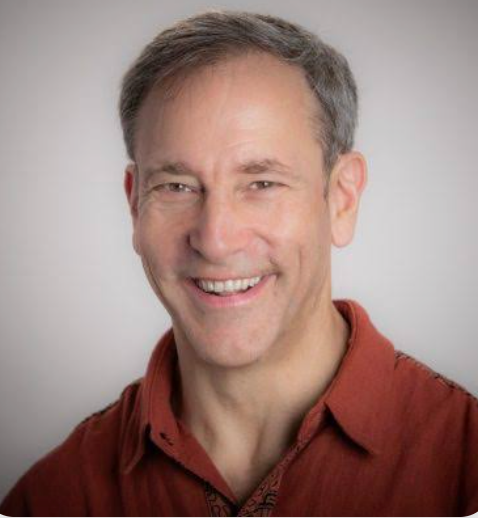
December 1961 - September 2026 Personal reflections by Lori Chortkoff Hops, PhD, DCEP, Former ACEP President Shockingly, we lost a great one. Teacher extraordinaire. Multitalented healer. Introspective thinker. Generously hearted. Craig Weiner lived life with gusto, whether vibing with international creative expressions of formal and street art or cherishing exotic cuisine, deftly climbing rocky heights, or sunset kayaking with whales in the sound. Craig was ever curious for the next adventure, delighted with spontaneous encounters with new and familiar souls and animals, sounds and colors. Holding a razor-sharp memory, Craig could easily quote an apt phrase, whether common or obscure, at a moment's notice , highlighting one of his many areas of expertise or fascination. How strange indeed to be left with the echoes of silence his memory traces through our collective grief. Only months before his passing from the physical form, Craig and his beloved wife and partner, Alina Frank , were newly settling into their home in sunny Mexico, far from their home of many years in the lush wetlands of the Pacific Northwest. In true Craig style, he befriended many people right away, while sharing his antics with those at home through his active social media sites. Many relished his detailed narratives with videos from stunning desert, sea, mountain, and waters of the world. Craig greeted people with glee, with his trusted dog Bibi (aka Habibi Bear) in tow. In true Craig fashion, Bibi sometimes was carried and worn like a scarf, riding on the back of Craig's neck. Craig gave unceasingly from his soul for the well-being of all, leaving an immeasurable impact on the field of energy healing. His accomplishments are broad and deep, and can be found listed on his website . In his brief time with us, though he accomplished much, he left many dreams unrealized. It is up to us to find our way to extend what we loved best about Craig, and make it happen with him in mind. Beyond his vast curricula of knowledge and products and classes, I was most touched by Craig's unceasing commitment to excellence, deeply sharing authentically from his heart moments of pain and joy, his snappy sense of humor, and his infectious smile with a hearty laugh asking us to meet his mood with our own joy. Craig's life is honored with two memorial services, in his two homes, with beloved friends and family. And we will all be able to track Craig's eternal spirit when we hear the splash of sea life, see silver light dancing on the water, and feel the warmth of love in laughing eyes, no matter the species. You can learn more about Craig's life story and work in his own words through this podcast interview with me . If you wish to donate to a charity in Craig Weiner's name, his wife Alina Frank has kindly requested choosing Jovenes Adelante . Jóvenes Adelante AC is a Mexican Donataria Autorizada; JA is a 501 (c) (3) non profit. All financial contributions are tax deductible. About the Autor Lori Chortkoff Hops, PhD, DCEP is a licensed psychologist in Westlake Village, California, USA. She is certified in Comprehensive Energy Psychology and Logosynthesis. Lori is a past ACEP president and Reiki master. Learn more about Lori at www.drlorihops.com . Lori teaches online intuition classes and consultation. Check out her podcast Healing Tips from the Heart: Helpers, Healers and Guides.
By Dawn Eidelman • October 14, 2026
Widening the Circle: The Ripple Effect (Part 1 of 3) 
By Amy Frost • October 14, 2026
When people hear the words humanitarian work, they may imagine traveling across the world to respond to a war, natural disaster, or humanitarian crisis. That work matters enormously. But over many years of working with veterans, military families, first responders, community leaders, and the ACEP Humanitarian Committee, I have learned something equally important: You do not have to travel across the world to change the world. You can begin with the community right in front of you. I grew up in a military family. I was born on an Air Force base. My uncle, a Navy pilot, died in a plane crash when I was very young. Years later, my husband Tom died during Desert Storm, and the life I thought I had mapped out suddenly disappeared. At the time, I had a successful career with the Department of Defense. I had an MBA. I knew how to organize, manage, execute, and get things done. Grief didn't particularly care. Eventually, my own search for healing led me to earn a master's degree in spiritual psychology. Over time, what began as my own journey became a calling to serve veterans and their families—and, increasingly, the many people who spend their lives serving others. Build Community Before the Crisis One of the most important lessons I have learned about humanitarian work is surprisingly simple: Don't just run in to help. Build relationships first. Years ago, through ACEP's humanitarian work, Suzanne Connolly, Dr. Kristin Miller, and I became involved in developing what evolved into a Veteran-to-Veteran project in Las Vegas. We didn't simply arrive with a program and tell veterans what we thought they needed. We reached out to people already trusted within the veteran community—leaders connected with the VA, Nevada veterans' services, veteran groups, and other community organizations. We listened. We built relationships and earned their buy-in. Then we introduced tools from Thought Field Therapy and energy psychology that they could use themselves and share within the circles where they already had trust. My job was not to become the center of the system. My job was to help strengthen the system that was already there. Our final formal training took place in April 2017. Six months later, on October 1, Las Vegas experienced a devastating mass shooting.  Suddenly, the relationships we had spent years cultivating mattered in ways none of us could have anticipated. I didn't have to figure out how to reach an entire traumatized city. The network already existed. I could reach the leaders I knew, support them, and help them support their own communities. Build community before the crisis. When something happens, you won't be starting from zero. The Ripples Create More Ripples Today, I continue working with veterans and their families throughout Las Vegas. I support the Rebel Vets community at UNLV when they need me, and I facilitate a monthly gathering at the City of North Las Vegas Veterans & Community Resource Center. We deliberately call it Women's Fun Day . Why? Because if we called it Suicide Prevention, a lot of people who need connection might never walk through the door. Women veterans come, but so do spouses, adult children, caregivers, and community supporters. We talk. We laugh. We practice something simple—a breathing technique, tapping, another self-regulation tool. Sometimes I support them. Sometimes they support me. And then something wonderful happens: people take what they learn and carry it somewhere else. One veteran I've known for years is now in pastry school and mentoring younger people there. She is sharing some of the practices she has learned with the young people she encounters. Others have created simple “walk and talk” gatherings in local parks or brought self-care practices into coffee shops and community groups. This is how humanitarian work grows: the ripples create more ripples. It doesn't always require a large grant, a formal program, or an airplane ticket. Sometimes it begins with a walk. Sometimes with coffee. Sometimes with one person asking another person, How are you, really? Hope Providers Need Hope, Too There is another part of humanitarian work that I believe we need to talk about much more openly. I call it providing hope for the hope providers . The people who spend their lives helping others—clinicians, first responders, veterans, caregivers, nonprofit leaders, teachers, humanitarians—can become extraordinarily good at appearing fine. They are often the people everyone else depends upon. That can make it very difficult for them to say, I need help. I think about suicide prevention through that wider lens. Long before someone reaches the most visible point of crisis, something may be disappearing mentally, emotionally, or spiritually. Someone may continue running an organization, caring for a family, or serving a community while quietly running out of resources themselves. I know something about this personally. After my husband died, there were moments when I did not want to be here. I had to find my own way through that terrain. Years later, during the aftermath of the Las Vegas shooting, my own grief resurfaced. I had spent years learning about self-care and teaching it to other people. But I discovered another layer underneath all my competence and activity. I needed to learn how to receive care, too. If we want people to remain in the work for the long haul, we have to support the people doing the supporting. Why ACEP Matters to Me This is one reason ACEP has become so important in my life. ACEP gives me community. It gives me people with whom I can have conversations I don't get to have anywhere else. It gives me trusted resources and colleagues who understand this work from the inside. Through ACEP's Humanitarian Committee and our conferences, I have met people who became dear friends—and then became collaborators in doing good in the world. We support one another. We challenge one another. We remind one another to practice the very things we teach. And ACEP's humanitarian work has never been only about what one committee accomplishes. Its real power lies in what happens when someone gets an idea, finds a few kindred spirits, learns useful tools, and takes them home. One person mentors another. One project becomes another. One community develops its own capacity to respond. Eventually, we don't even know where all the ripples have traveled. That is a good thing. Start Where You Are So what would I say to someone who feels called to humanitarian work but doesn't know where to begin? Start where you are. Find something you genuinely care about. Find the people already doing the work and listen to them. Learn a few practices that can help people regulate stress and reconnect with themselves and one another. Make those practices simple and accessible. Find collaborators. Take care of yourself while you are doing it. And then give other people permission to take what works and make it their own. You do not have to do everything. You are not supposed to. Maybe your contribution is traveling to a community in crisis. Maybe it is supporting the people who do. Maybe it is mentoring one young practitioner, gathering veterans for coffee, teaching a breathing technique, checking on a caregiver, or simply believing in someone who has forgotten how to believe in themselves. Make it simple. Make it fun. Do what you're here to do. Then let the ripples travel. Because perhaps that is the deepest lesson humanitarian work has taught me: we are not here to rescue one another. We are here to build communities strong enough that we can care for one another. About the Author Amy Frost, MBA, MA Spiritual Psychology, is an educator, facilitator, trainer, coach, writer, and longtime humanitarian whose work has included veterans, military families, first responders, community servants, and those who support them. A longtime member of ACEP's Humanitarian Committee and ACEP's 2018 Humanitarian of the Year, Amy has spent decades developing community-based approaches to resilience, self-care, peer support, and humanitarian service. Image by qimono from Pixabay
More Posts